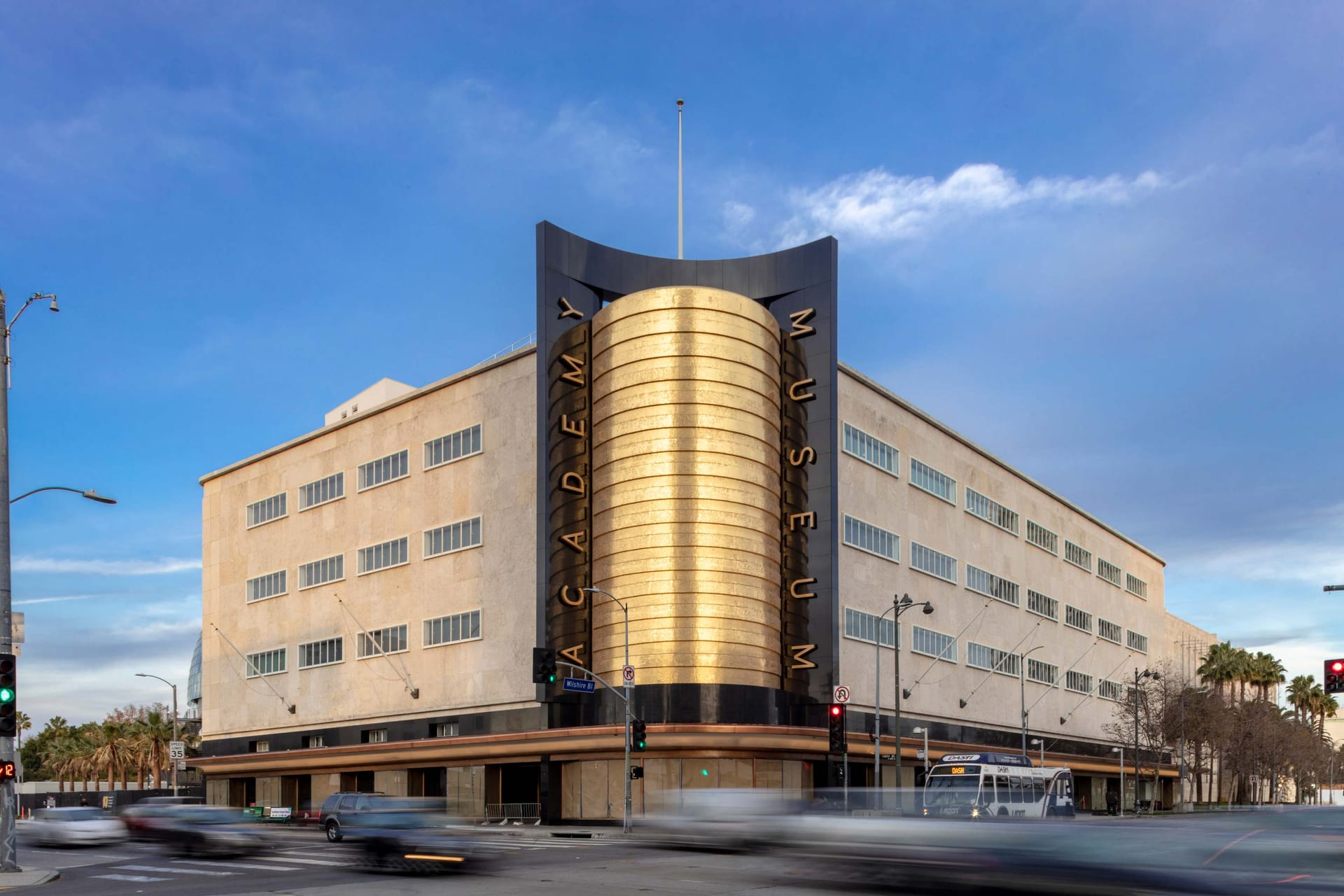
Building Blocks of the Academy Museum
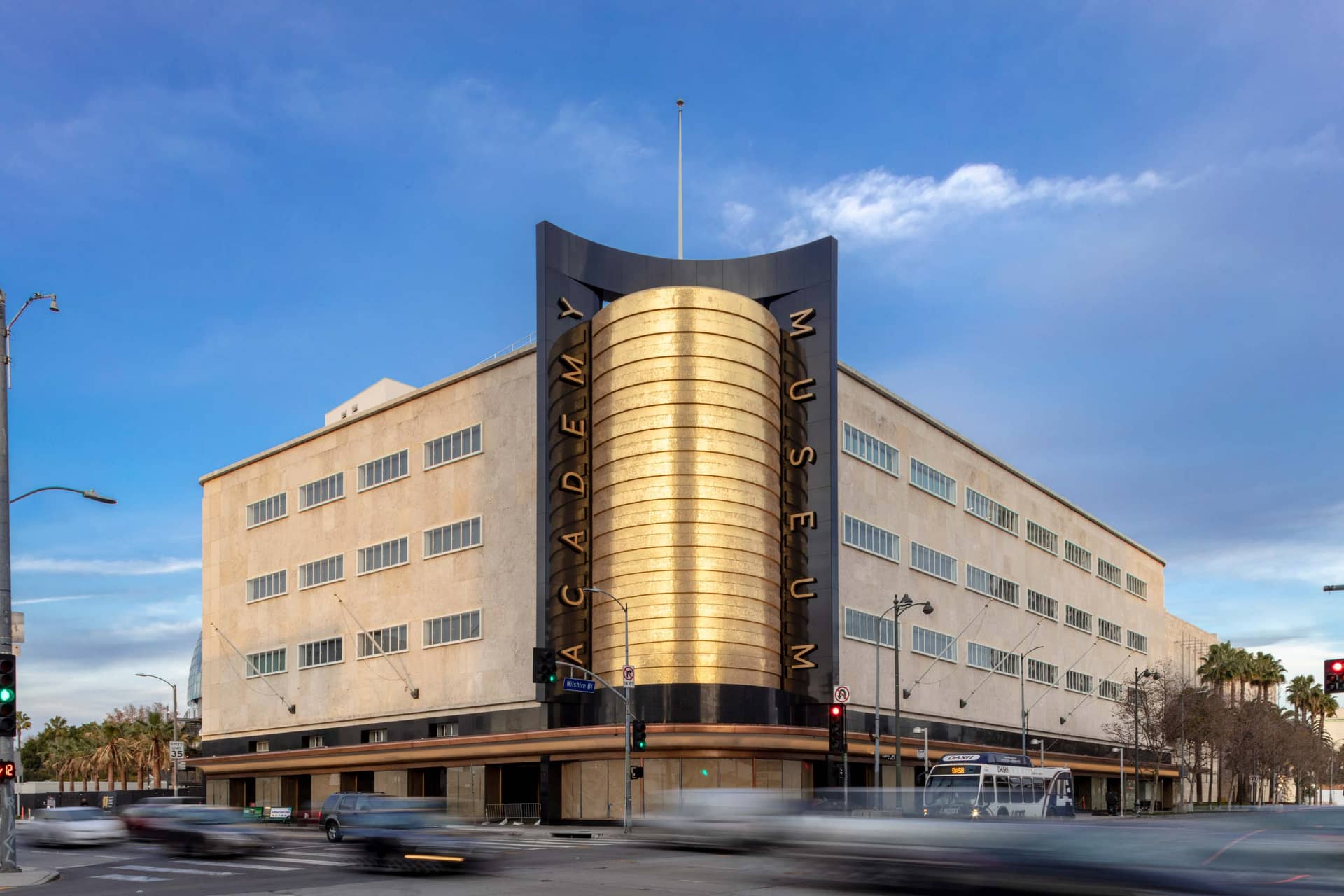
In late 2017, the Academy Museum of Motion Pictures began the critical, detailed process of restoring the 350,000 24-karat gold glass mosaic tiles covering the iconic cylinder of the Saban Building, originally built in 1939. What was once the Wilshire May Company department store will house the Museum’s gallery spaces, lobby, education studio, 288-seat theater, restaurant, café, and retail space. To bring the tiles back to their 1930s glory, the Academy Museum sourced replacements from their original family-owned manufacturer, Orsoni, in Venice, Italy.
The Conservation Process
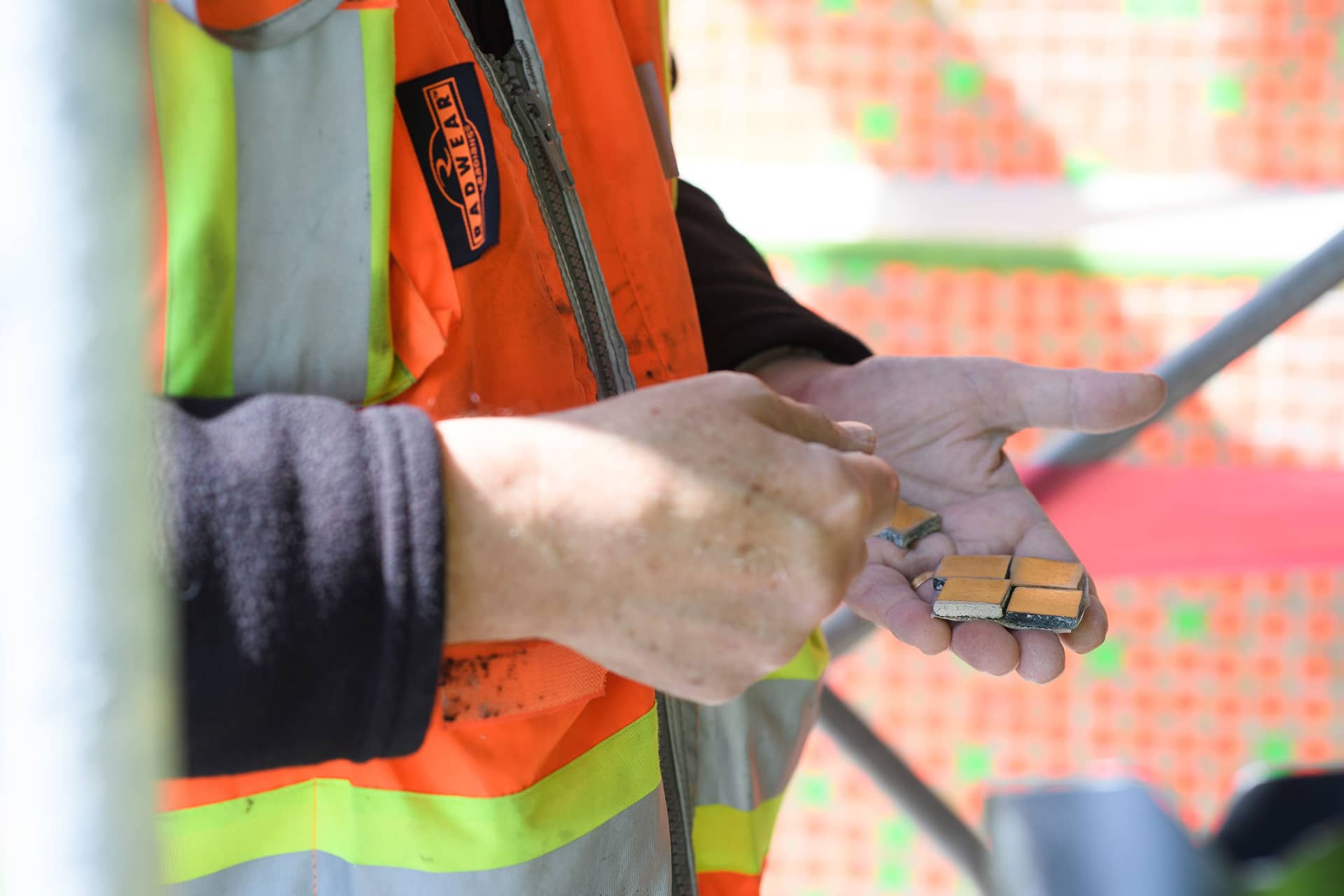
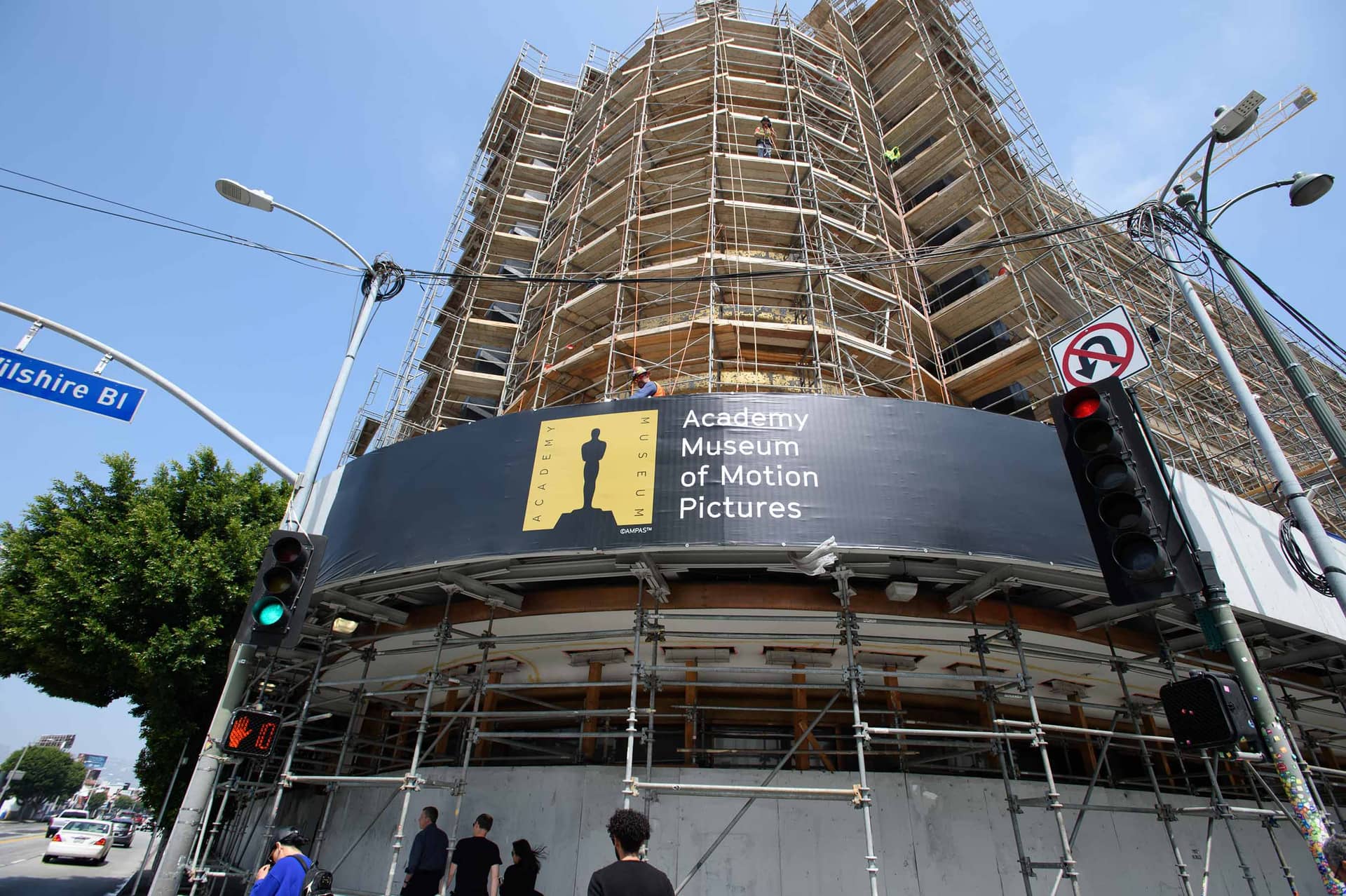
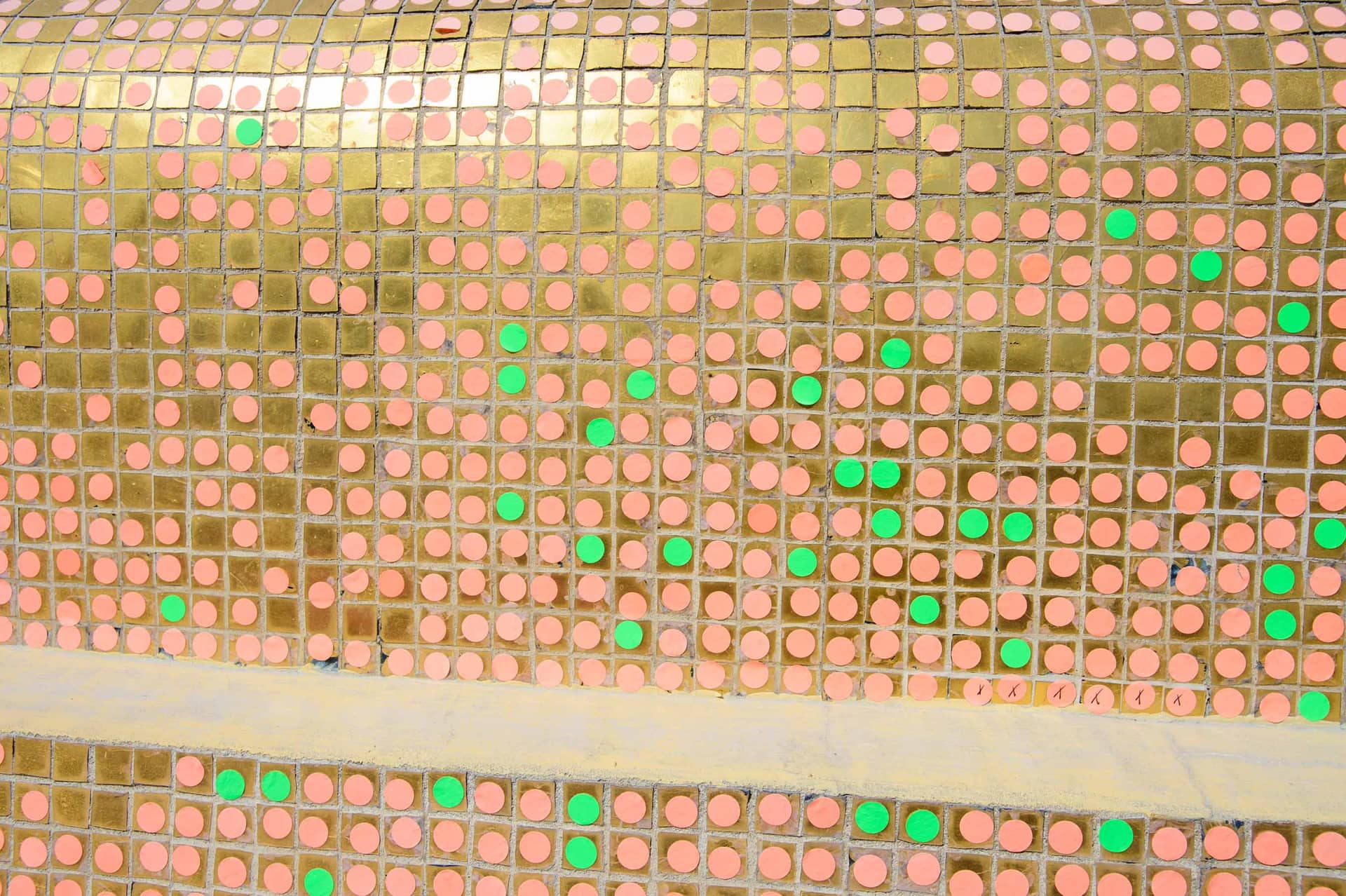
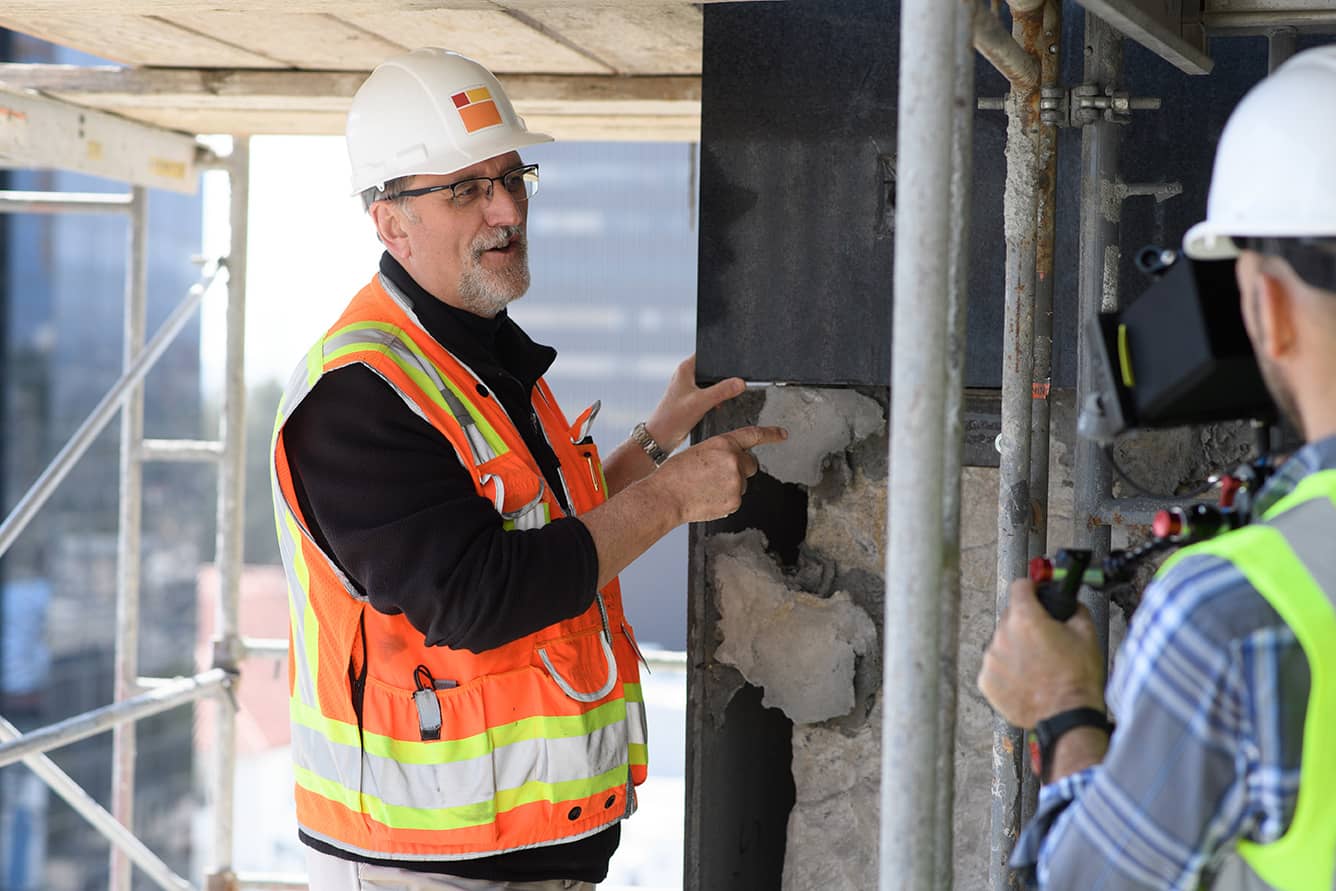
Conserving the façade of the Saban Building does not just entail replacing original tiles that have been damaged in the building’s 90-year history. Damaged original tiles were removed and replaced with modern machine-made tiles in 1968 and again in 1991. Unlike the originals, the modern tiles were completely regular, flat, and single-sized, as opposed to handmade tiles that have surface texture, irregular shape, and size variations indicative of hand-blown, hand-cut glass. Most importantly, the modern tiles were not made with 24-karat gold and did not therefore match the originals in color or luster. To begin work on restoring the façade, a team of experts used sophisticated telephoto imaging techniques to remotely inspect the mosaic. Engineers also rappelled down the hemi-cylinder to provide additional survey information before each tile was inspected by hand from a scaffolding. All this data helped trace the source of deterioration for each damaged tile. The façade restoration was finished in December 2018, returning the cylinder to its original gold luster. Ultimately, 200,000 (or 57%) damaged or non-matching 1990s replacement tiles were made anew. The limestone on the building’s façade has also been sourced to its place of origin, just outside of Austin, Texas. Ninety-five percent of the 1,200 cladding panels have been retained, cleaned, and repaired with new matching stone.
A Life Dedicated to Mosaic
Angelo Orsoni was born into a Murano family in the mid-nineteenth century and spent his early years working in glass factories. He was soon discovered by a celebrated mosaicist who opened a factory making mosaic tiles in Venice and offered Orsoni a job producing the smalti, a unique kind of colored glass used in mosaics. Orsoni took over the workshop in 1888. Orsoni’s name became linked to major projects involving the Sacré-Coeur Basilica in Paris, the celebrated Paris Opera House, the Sanctuary of Our Lady of Lourdes, and St. Paul’s Cathedral in London. When Orsoni died in 1921, his son Giovanni inherited the company. He was responsible for the wonderful mosaic decorations on the spires of Antoni Gaudí's masterpiece, The Basilica de la Sagrada Família in Barcelona, for those inside the Altare della Patria in Rome, and the astonishing Golden Room in Stockholm City Hall. Today, Giovanni’s grandsons, Ruggero and Lucio, carry on the family’s legacy.
The Making of the Mosaics
The creation of smalti starts with the same basic ingredients used to make other types of glass, including sand. These ingredients, along with the coloring agents, are heated in furnaces at extremely high temperatures to create a glass paste. When the color and firing have reached the desired point, the molten paste is removed from the pot and crafted into oblong slabs, which are then cooled. The large glass slabs are sliced into rods using a diamond blade and chipped down into small rectangles with manually operated cutting machines. The tiles on the Saban Building cylinder are made using 24-karat gold. This allows the tiles to withstand high temperatures and pressure. The gold leaf is sandwiched between a transparent glass base and a fine, hand-blown glass that protects the surface. The three elements, heated once again, are welded into a single slab. One cubic centimeter of gold can make over six square meters of beaten gold in a layer so fine, it is barely perceptible to the human eye.
A Landmark for Los Angeles
Inside the Academy Museum, visitors will explore the past, present, and future of filmmaking through singular objects, interactive experiences, and innovative programs. Outside, they’ll find yet another connection to Los Angeles’ unique history: the gold-glass mosaic tile cylinder at the corner of Fairfax and Wilshire, the signature feature of the iconic Saban Building and a shining western gateway to the Miracle Mile.